English
How to Choose a Hydraulic Punching Machine for Tube and Profile Processing
Choosing the right hydraulic punching machine is not simply a matter of comparing machine prices or selecting the model with the highest punching force.
The correct machine configuration depends on the material, profile shape, wall thickness, hole dimensions, hole spacing, production volume, feeding length, and level of automation required.
A machine that is suitable for square tube production may not be the best choice for angle steel, channel steel, aluminum profiles, or H-sections. Before requesting a quotation, buyers should provide complete workpiece information so that the manufacturer can recommend the correct hydraulic system, tooling, feeding method, and control configuration.
This guide explains the main factors to consider when choosing a hydraulic punching machine for tube and profile processing.
What Is a Hydraulic Punching Machine?
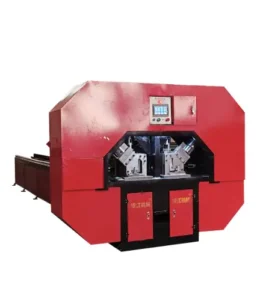
A hydraulic punching machine uses hydraulic pressure to drive a punch through a workpiece and into a matched die.
Depending on the configuration, the machine can process round holes, square holes, rectangular holes, slots, notches, and other customized shapes.
Hydraulic punching machines are commonly used for repeated hole processing on:
- Square and rectangular tubes
- Round pipes
- Angle steel
- Flat steel
- Channel steel
- Aluminum profiles
- Steel frames
- H-sections and structural profiles
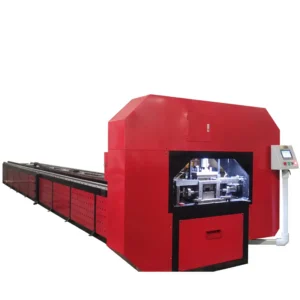
The machine may be manually loaded, equipped with servo feeding, or integrated with automatic positioning and fixed-length cutting.
Confirm the Material and Profile Type
The first step is to confirm exactly what material and profile will be processed.
Common materials include:
- Carbon steel
- Stainless steel
- Aluminum
- Galvanized steel
- Copper
- Other metal profiles
Different materials have different strength and punching requirements. Stainless steel normally requires more punching force than aluminum of the same thickness, while structural profiles may require customized fixtures to prevent movement or deformation during punching.
The profile shape is equally important. A square tube, angle steel, channel steel, and H-section require different clamping, guiding, and die structures.
A buyer should not only say, “I need a hydraulic punching machine.” The manufacturer should receive the exact material grade and profile drawing before confirming the machine.
Provide the Maximum Profile Size and Wall Thickness
The machine must be selected according to the largest workpiece that will enter the production line.
Important dimensions include:
- Outside diameter of round pipes
- Width and height of square or rectangular tubes
- Leg dimensions of angle steel
- Width and height of channel steel
- Profile length
- Wall thickness
- Maximum workpiece weight
The maximum profile size affects the feeding rack, clamps, guide rollers, machine opening, and tooling structure.
Wall thickness affects the required punching force and die clearance. A machine selected only according to the outside dimensions may still be unsuitable if the material thickness exceeds the tooling or hydraulic capacity.
Check the Hole Shape, Size, and Spacing
The manufacturer must also review the complete hole layout.
Provide a dimensioned drawing showing:
- Hole shape
- Hole diameter or dimensions
- Distance between holes
- Distance from the hole to the material edge
- Number of holes on each workpiece
- Hole direction
- Whether holes are required on one, two, or multiple sides
Round holes are generally simpler than complex slots, notches, or multiple hole shapes.
When several hole shapes are required, the machine may need multiple punching stations or interchangeable dies. If holes must be punched on different sides, the solution may require material rotation, several cylinders, or a multi-sided punching structure.
Calculate the Required Punching Force
Punching force should be determined from the actual workpiece rather than estimated only from the machine name.
The required force is mainly affected by:
- Hole perimeter
- Material thickness
- Material shear strength
- Number of holes punched at the same time
- Punch geometry
- Tool condition
A larger hole perimeter, thicker material, or stronger material requires more punching force. Tooling suppliers calculate punching force using the hole perimeter, material thickness, and shear strength of the material. :contentReference[oaicite:1]{index=1}
The machine should have sufficient capacity for the most demanding workpiece, but selecting an unnecessarily oversized hydraulic system may increase equipment cost, power consumption, and maintenance requirements. A professional punching force calculator can be used as an initial reference when checking the required machine capacity.
Decide Between a Single-Station and Multi-Station Machine
A single-station machine is suitable when the product mainly requires one hole shape or a relatively simple punching process.
Advantages include:
- Simpler tooling
- Lower initial investment
- Easier operation
- Faster setup for stable products
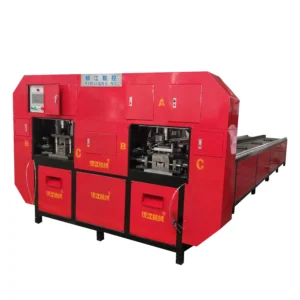
A multi-station machine is more suitable when several hole shapes or processing steps are required.
Different stations may be configured for:
- Round holes
- Slots
- Notches
- Cutting
- End punching
- Different sides of the profile
The correct choice depends on the product variety and how frequently production changes between different workpieces.
Choose the Correct Feeding and Positioning Method
Manual feeding may be suitable for low-volume production, short materials, or products with simple hole positions.
For repeated batch production, servo feeding is normally more suitable. The feeding system moves the workpiece according to programmed dimensions and positions each hole before punching.
Automatic feeding can reduce:
- Repeated manual measurement
- Marking work
- Positioning differences
- Operator handling
- Accumulated errors during batch production
When evaluating the feeding system, confirm:
- Maximum feeding length
- Positioning accuracy
- Repeat positioning accuracy
- Maximum workpiece weight
- Whether repeated feeding is supported
- How the material is clamped
- How the remaining tail material is handled
Long or heavy profiles may require an extended loading rack and additional support rollers.
Decide Whether Cutting Should Be Integrated
Some production lines only require hole punching. Others require the material to be punched and then cut to a fixed length.
When punching and cutting are completed on separate machines, workers may need to transfer, reposition, and measure the material again.
An integrated punching and cutting machine can combine:
- Automatic feeding
- Programmed positioning
- Hole punching
- Fixed-length cutting
- Finished-part discharge
This type of configuration is particularly useful for repeated products such as aluminum profiles, brackets, frames, supports, racks, and structural components.
However, an integrated machine is not always necessary. If the factory already has an efficient cutting process, or if products require highly flexible contours, a separate punching or laser cutting solution may be more suitable.
Review the Punching Dies and Changeover Method
The die is one of the most important parts of the punching process.
Before ordering the machine, confirm:
- Which dies are included
- Which hole shapes will be supplied
- Die material
- Expected tool life
- Die replacement procedure
- Availability of spare punches and dies
- Delivery time for additional tooling
- Whether future products can use new customized dies
For factories producing several products, changeover time is important. A machine that processes quickly but requires a long tooling change may reduce overall production efficiency.
The die clearance must also match the material type and thickness. Incorrect clearance can increase burrs, tool wear, stripping problems, and hole deformation.
Confirm the Control System and Program Storage
A suitable control system should allow the operator to enter or store production parameters clearly.
Useful functions may include:
- Hole position programming
- Workpiece length settings
- Product recipe storage
- Quantity settings
- Manual and automatic operation
- Alarm information
- Parameter protection
- Multiple production programs
- Remote technical support
Program storage is useful when the factory repeatedly produces the same products. The operator can recall the saved program instead of entering all dimensions again.
Check Safety and Maintenance Requirements
The machine should include appropriate protection around the punching area and moving parts.
Depending on the machine configuration, safety features may include:
- Protective guards
- Emergency stop buttons
- Guarded foot pedals
- Two-hand controls
- Safety light curtains
- Electrical overload protection
- Hydraulic pressure protection
- Warning labels
OSHA guidance for hydraulic presses states that guarding should protect workers from point-of-operation and other machine hazards; foot controls should also be guarded, and emergency stops should be readily accessible. :contentReference[oaicite:2]{index=2}
Buyers should also ask about routine maintenance, including:
- Hydraulic oil replacement
- Filter inspection
- Lubrication
- Tool sharpening
- Guide and clamp adjustment
- Sensor inspection
- Hydraulic leakage checks
- Spare-parts availability
Evaluate the Manufacturer’s Testing and Support
Before shipment, the machine should be tested with workpieces that are close to the buyer’s actual material.
The test should confirm:
- Hole dimensions
- Hole position
- Finished-part length
- Processing speed
- Feeding stability
- Tool performance
- Material deformation
- Continuous batch operation
When possible, buyers should send sample materials or drawings before production begins.
The supplier should also provide clear information about:
- Installation
- Operation training
- English manuals
- Electrical requirements
- Hydraulic maintenance
- Remote support
- Spare parts
- Warranty coverage
Information to Send Before Requesting a Quotation
To receive a suitable machine recommendation, prepare the following information:
- Material type and grade
- Profile drawing and dimensions
- Maximum wall thickness
- Workpiece length
- Hole drawing and dimensions
- Distance between holes
- Hole direction and processing sides
- Required production quantity
- Required cutting length
- Factory voltage and frequency
- Photos or videos of the current production process
- Required level of automation
Providing complete information helps the engineering team determine the punching force, die structure, number of stations, feeding system, cutting method, and control program.
Conclusion
Choosing a hydraulic punching machine requires more than comparing machine prices and nominal pressure.
The machine should be selected according to the actual material, profile size, wall thickness, hole pattern, processing sides, feeding length, tooling requirements, and production output.
For repeated batch production, an automatic feeding and positioning system can reduce manual measurement and improve process consistency. For products that also require fixed-length cutting, an integrated punching and cutting solution may simplify the production flow.
Send your profile drawings, hole layout, material information, and production requirements to our engineering team for a suitable machine configuration.
Frequently Asked Questions
Can one hydraulic punching machine process different profiles?
A machine may process several profile sizes or products when its working range, clamps, guides, and tooling are designed accordingly. Different profile shapes may require separate fixtures or dies.
How much punching force does my product require?
The required punching force depends on the hole perimeter, material thickness, material shear strength, and the number of holes punched simultaneously. The final machine capacity should be confirmed from the actual drawing and material.
Should I choose hydraulic punching or laser cutting?
Hydraulic punching is commonly suitable for repeated holes and stable batch products. Laser cutting provides greater flexibility for frequently changing patterns, complex contours, and products that do not justify dedicated dies. The decision should be based on production volume, hole design, material, and changeover frequency.
What drawings should I provide to the machine manufacturer?
Provide a complete profile drawing, material grade, wall thickness, workpiece length, hole dimensions, hole spacing, processing sides, cutting length, and expected production quantity.