English
Table of Contents
Introduction
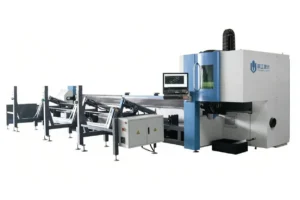
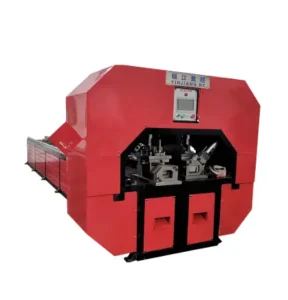
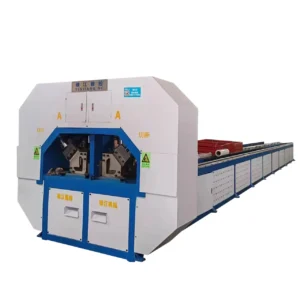
A punching and cutting machine for aluminum profiles combines material feeding, programmed positioning, hole punching, and fixed-length cutting in one production system.
In a traditional production process, aluminum profiles may need to be measured, punched, transferred to another machine, repositioned, and then cut to the required length. Each additional step requires time, labor, and material handling. Repeated positioning may also affect hole spacing and finished-part consistency.
An integrated punching and cutting machine is designed to reduce these separate operations. Once the profile dimensions, hole positions, cutting length, and production parameters are confirmed, the machine can process the material according to the programmed sequence.
However, combining punching and cutting is not automatically the best choice for every factory. The final machine configuration should be based on the actual aluminum profile, hole pattern, wall thickness, cutting requirements, and expected production volume.
This article explains how the integrated process works, what advantages it can provide, and what information a manufacturer should prepare before requesting a machine solution.
What Is a Punching and Cutting Machine for Aluminum Profiles?
A punching and cutting machine for aluminum profiles is a customized processing system that performs two main operations:
- Punching holes, slots, notches, or other required shapes
- Cutting the processed profile to a specified length
Depending on the application, the machine may include:
- An automatic feeding system
- Servo positioning
- Hydraulic punching stations
- Customized punching dies
- A fixed-length cutting unit
- A programmable control system
- Material support and collection devices
The operator loads the aluminum profile, selects the processing program, and starts the production cycle. The feeding system moves the profile to the required position, the punching station completes the hole pattern, and the cutting unit separates the finished part at the programmed length.
The machine layout is not identical for every product. The number of punching stations, feeding method, cutting method, clamping structure, and die design must match the profile and finished component.
Why Combine Punching and Cutting in One Machine?
Punching and cutting are often connected steps in aluminum profile production.
For example, a finished component may require:
- Several holes at fixed intervals
- One or more slots near the end of the profile
- A specific finished length
- Repeated production of the same design
Using separate machines means the operator must move the material from one process to another. The workpiece may also need to be measured and positioned again before cutting.
Combining both processes allows the production sequence to be completed with fewer interruptions. The main purpose is not simply to place two functions in one machine. It is to create a more connected workflow based on the finished product.
1. Fewer Material Transfers Between Machines
One of the main advantages of an integrated system is the reduction of material transfers.
With separate equipment, the production process may include:
- Loading the profile onto a punching machine
- Measuring and positioning the material
- Completing the required holes
- Removing the profile
- Moving it to a cutting machine
- Measuring the cutting length again
- Cutting and collecting the finished component
Every transfer takes time and requires additional handling.
A punching and cutting machine for aluminum profiles can complete these operations in one connected production cycle. This is particularly useful for long profiles or repeated batch orders, where moving material between machines creates a production bottleneck.
Reducing transfers can also help lower the risk of scratching, bending, or mixing partially processed profiles.
2. More Consistent Hole Positioning and Cutting Length
Hole position and cutting length are often related.
If the first hole must be located a specific distance from the end of the finished component, both the punching and cutting positions must be controlled accurately. When the two operations are completed separately, each machine requires its own positioning process.
An integrated system uses programmed feeding to control both operations within the same workflow. This can improve consistency between:
- Hole spacing
- Distance from the hole to the profile end
- Finished component length
- Repeated parts within the same batch
Actual positioning accuracy depends on the feeding system, profile shape, clamping method, material straightness, machine structure, and required tolerance.
For applications with stricter positioning requirements, servo feeding and suitable profile-guiding devices may be recommended.
3. Faster Batch Production
Integrated punching and cutting equipment is especially suitable for repeated production.
Once the processing program has been confirmed, the machine can repeat the feeding, positioning, punching, and cutting sequence for multiple profiles. Workers do not need to mark every hole or measure every finished length manually.
This can shorten the production cycle for products such as:
- Aluminum window and door components
- Solar mounting profiles
- Furniture frames
- Display rack profiles
- Electrical enclosure components
- Industrial support structures
- Customized aluminum brackets
The actual production speed depends on several factors, including:
- Number of holes per workpiece
- Hole shape and size
- Profile wall thickness
- Feeding distance
- Cutting method
- Required finished length
- Number of punching stations
- Material loading method
A machine should therefore be evaluated using the customer’s real product drawing rather than only a general speed figure.
4. Reduced Manual Measurement and Handling
Manual processing often requires workers to measure the same workpiece several times.
The operator may need to mark the punching positions, check the distance between holes, reposition the profile, measure the cutting length, and inspect the finished part.
A programmed feeding system reduces many of these repetitive steps. The operator mainly focuses on:
- Loading the material
- Selecting the correct program
- Monitoring machine operation
- Checking finished components
- Collecting processed parts
Reducing repeated measurement can improve production consistency and make the process less dependent on operator experience.
It can also allow workers to spend more time on material preparation, quality control, machine monitoring, and production planning.
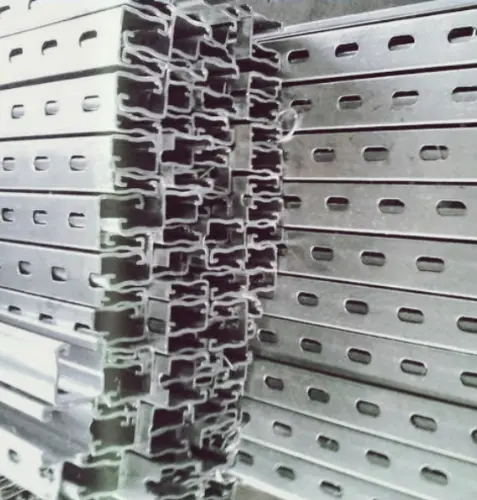
5. Customized Punching Dies for Different Products
Aluminum profiles are used in many industries, and the required hole patterns vary significantly.
Customized punching dies can be developed for:
- Round holes
- Square holes
- Rectangular holes
- Elongated slots
- Notches
- End cuts
- Connection holes
- Special profile openings
The die structure must be designed according to:
- Aluminum alloy
- Profile cross-section
- Wall thickness
- Hole dimensions
- Distance between holes
- Distance from the hole to the profile edge
- Required punching direction
- Expected production quantity
Some products may require more than one punching station. For example, one station may process round holes while another produces slots or openings on a different surface.
Before the machine is manufactured, the supplier should review the customer’s drawings and determine whether the required holes can be completed by punching. Complex shapes, very small edge distances, or frequently changing designs may require another processing method.
6. Automatic Feeding for Repeated Processing
The feeding system is a key part of an integrated punching and cutting machine.
Its purpose is to move the aluminum profile to each programmed position. Depending on the machine design, feeding may be completed using:
- Servo-driven rollers
- Clamping and pushing systems
- Gripper feeding
- Customized profile-guiding devices
The correct feeding method depends on the profile shape, length, surface condition, wall thickness, and required positioning accuracy.
For profiles with decorative or finished surfaces, the contact points should be considered carefully to reduce the risk of scratches or deformation.
Automatic feeding is particularly valuable when the same hole pattern and cutting length must be repeated across a large batch. Programs can also be stored for different products, depending on the control system.
7. Better Use of Factory Space
Using separate punching and cutting machines requires space for:
- Two machine bodies
- Material loading areas
- Intermediate storage
- Operator movement
- Workpiece transfer
- Finished-part collection
An integrated machine can reduce the space required between production steps.
This does not mean the equipment will always be small. Long aluminum profiles still require sufficient feeding and supporting space. However, combining the two processes can create a more organized production layout and reduce unnecessary work-in-process storage.
Before selecting a machine, the customer should provide information about the available factory area, material length, loading direction, and preferred production flow.
8. Easier Production Management
A connected production process is generally easier to monitor than several disconnected manual steps.
The control program can define:
- Feeding distance
- Hole positions
- Punching sequence
- Number of workpieces
- Cutting length
- Production quantity
This makes it easier to repeat approved products and manage batch orders.
Operators should still inspect the first finished component before continuous production. Material differences, profile tolerances, die wear, and setup changes may affect the final result.
A practical production procedure normally includes:
- Confirming the correct material
- Selecting the correct program
- Producing the first sample
- Checking the hole position and cutting length
- Starting batch production
- Conducting regular quality inspections
Automation improves consistency, but proper setup and inspection remain necessary.
Common Applications
A punching and cutting machine for aluminum profiles can be customized for many products.
Aluminum Window and Door Profiles
Window and door components may require connection holes, drainage slots, assembly holes, and fixed-length cutting.
Integrated equipment can be suitable when the same profile design is produced repeatedly.
Solar Mounting Profiles
Solar mounting systems often use aluminum rails and brackets with repeated holes or slots.
Programmed feeding and customized punching dies can help process repeated mounting positions before the profiles are cut to length.
Furniture and Display Rack Profiles
Aluminum profiles used in furniture, shelving, and display systems may require repeated connection holes and standardized component lengths.
An integrated production process can reduce repeated measuring and handling.
Industrial Frames and Supports
Customized aluminum frames may require holes for fasteners, brackets, accessories, or assembly points.
The machine can be configured according to the frame component drawing and required production quantity.
Electrical and Equipment Components
Aluminum profiles used in electrical cabinets, machine guards, and equipment frames may require different holes, slots, and fixed lengths.
Multiple dies or processing stations may be used when the product includes several hole types.
When Is an Integrated Machine Most Suitable?
A punching and cutting machine for aluminum profiles is generally suitable when:
- The same products are produced repeatedly
- Hole positions follow a regular pattern
- Finished cutting lengths are clearly defined
- Production quantities are medium or high
- Manual measurement takes too much time
- Material transfers reduce efficiency
- Customized punching dies can cover the product range
- The factory wants a connected processing workflow
The machine is particularly valuable when punching and cutting are always required for the same component.
For example, if every finished profile requires four holes and a fixed cutting length, combining both processes may significantly simplify production.
When Separate Machines May Be More Suitable
An integrated machine is not always the best solution.
Separate equipment may be more suitable when:
- Punching and cutting are rarely required on the same product
- Product designs change very frequently
- Production quantities are very small
- Hole shapes are highly complex
- Different cutting processes are required
- The factory already has suitable cutting equipment
- Profiles vary significantly in size and structure
- Greater processing flexibility is more important than production speed
For prototypes or small orders with frequently changing hole patterns, CNC machining or laser cutting may offer greater flexibility.
The correct process should be selected according to the workpiece, production quantity, required tolerance, processing speed, and investment budget.
Information Required Before Machine Configuration
To configure a suitable punching and cutting machine, the manufacturer normally needs detailed product information.
Customers should prepare:
- Complete profile drawing
- Cross-sectional drawing
- Aluminum alloy or material grade
- Profile width and height
- Wall thickness
- Maximum material length
- Finished cutting length
- Hole shape and dimensions
- Distance between holes
- Distance from holes to profile edges
- Punching surfaces
- Required production quantity
- Target output
- Cutting quality requirements
- Product samples, if available
Photos alone are usually not enough for machine evaluation. Dimensioned drawings help the engineering team determine the feeding method, punching force, die structure, station layout, cutting method, and control program. Aluminum profile dimensional tolerances should also be considered when confirming the guiding, clamping, and positioning method.
If the customer produces several products, drawings for each product should be provided. The supplier can then evaluate whether one machine and several die sets can cover the complete product range.
Conclusion
A punching and cutting machine for aluminum profiles connects feeding, positioning, punching, and fixed-length cutting in one production process.
Its main advantages include:
- Fewer material transfers
- More consistent hole positions and cutting lengths
- Faster repeated production
- Less manual measuring
- Customized punching dies
- Automatic profile feeding
- Better use of factory space
- Easier batch-production management
However, the machine should be designed around the customer’s actual product rather than selected only from a standard model list.
Profile dimensions, wall thickness, hole patterns, cutting length, surface requirements, production quantity, and available factory space all influence the final machine configuration.
YINJIANG Machinery provides customized aluminum profile punching and cutting solutions based on customer drawings and production requirements. Our engineering team can review the workpiece information, evaluate the required processing sequence, and recommend a suitable feeding, punching, tooling, and cutting configuration. Send us your aluminum profile drawings, hole layout, cutting length, and production requirements for a suitable machine configuration.