English
Introduction
Aluminum profile manufacturers often need to process repeated holes, slots, notches, and cutouts before the profiles enter the assembly stage. These processing requirements vary according to the profile structure, product drawing, installation method, and final application.
For small orders, workers may use drilling machines or other manual tools. However, as production volume increases, manual processing can become slow and inconsistent. Differences in hole position, spacing, and appearance may also affect the final assembly of the window or door.
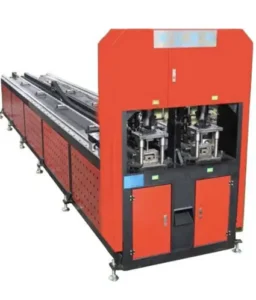
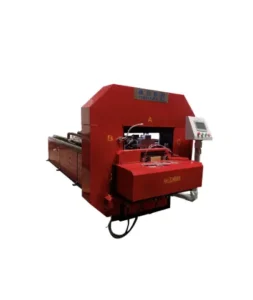
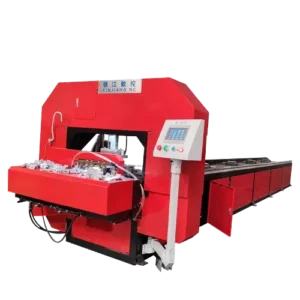
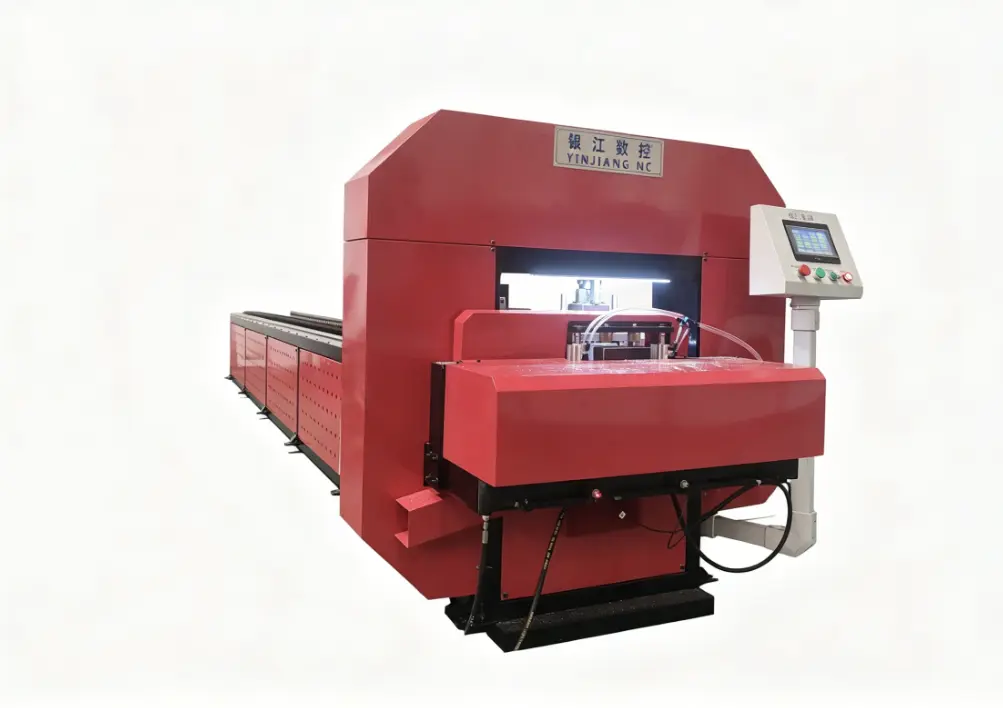
An aluminum window and door punching machine is designed to make this work faster and more repeatable. By using matched punching dies, positioning systems, and automatic feeding equipment, manufacturers can process the same hole pattern across multiple profiles with less manual measurement.
This article explains how an aluminum profile punching machine works, what types of profiles it can process, and what manufacturers should check before purchasing one.
Table of Contents
What Aluminum Profiles Can It Process?
An aluminum profile punching machine can process different types of aluminum sections according to the machine structure, feeding system, punching force, and die design.
Common workpieces may include:
- Rectangular aluminum profiles
- Square aluminum profiles
- Aluminum channels
- Aluminum tubes
- Aluminum frame profiles
- Customized extruded aluminum profiles
The machine can be configured to process repeated round holes, square holes, slots, notches, and other shapes required by the customer’s product drawing.
The actual processing range depends on the profile width, height, wall thickness, hole size, hole position, and distance between holes. For this reason, the punching dies and positioning system normally need to be designed according to the customer’s samples or technical drawings.
Before confirming a machine configuration, the customer should provide the profile drawing, material thickness, required hole pattern, profile length, and expected production capacity.
Common Applications of Aluminum Profile Punching Machines
Aluminum profile punching machines are mainly used for repetitive hole and slot processing in batch production. Compared with manual drilling, punching is more suitable when the same processing pattern needs to be repeated on a large number of profiles.
Repeated Hole Processing
The machine can process repeated holes at programmed positions along the aluminum profile. This is useful for products that require consistent hole spacing and positioning.
Slot and Notch Processing
Customized punching dies can be used to produce slots, notches, and other openings according to the customer’s technical drawings.
Automatic Profile Feeding
For long aluminum profiles, an automatic feeding system can move the material to each programmed position. This reduces repeated manual measuring and helps improve processing consistency.
Multi-Position Punching
Depending on the machine configuration, several hole positions or hole shapes can be processed on the same profile. Customized dies can be designed according to the required processing sequence.
Integrated Punching and Cutting
An all-in-one punching and cutting machine can complete profile feeding, positioning, punching, and cutting in one production process.
After the required holes have been processed, the machine cuts the aluminum profile to the programmed length. This reduces material handling and is suitable for batch production of standardized aluminum profile components.
How the Punching Process Works
The aluminum profile punching process is completed through a combination of material feeding, positioning, die punching, and finished-product collection.
Although the exact workflow depends on the machine configuration, a typical punching process includes the following steps.
1. Load the Aluminum Profile
The operator places the aluminum profile on the feeding platform or automatic loading system.
Before starting production, the profile specifications and processing requirements should be checked to ensure that they match the machine settings and punching die.
2. Set the Processing Parameters
The operator enters the required processing information into the control system, such as:
- Profile length
- Hole position
- Distance between holes
- Number of holes
- Cutting length
- Production quantity
For repeated orders, the processing parameters can be saved and reused according to the machine’s control system.
3. Feed and Position the Profile
The feeding system moves the aluminum profile to the programmed position.
Accurate positioning is important because it directly affects the distance between holes and the consistency of the finished profiles.
4. Complete the Punching Operation
Once the profile reaches the correct position, the punching unit drives the punch into the matched die.
The required hole, slot, or notch is formed according to the die design. For products with several processing positions, the profile continues moving until all programmed punching operations are completed.
5. Cut the Profile to Length
If the machine includes an integrated cutting unit, the processed aluminum profile can be cut to the programmed length after punching.
This allows feeding, positioning, punching, and cutting to be completed in one production process.
6. Inspect the Finished Profile
After processing, the operator should check:
- Hole dimensions
- Hole spacing
- Cutting length
- Profile deformation
- Burrs around the processed area
- Overall consistency
Regular inspection helps identify incorrect settings, worn tooling, or material differences before a large production batch is completed.
Punching Machine vs Laser Cutting Machine
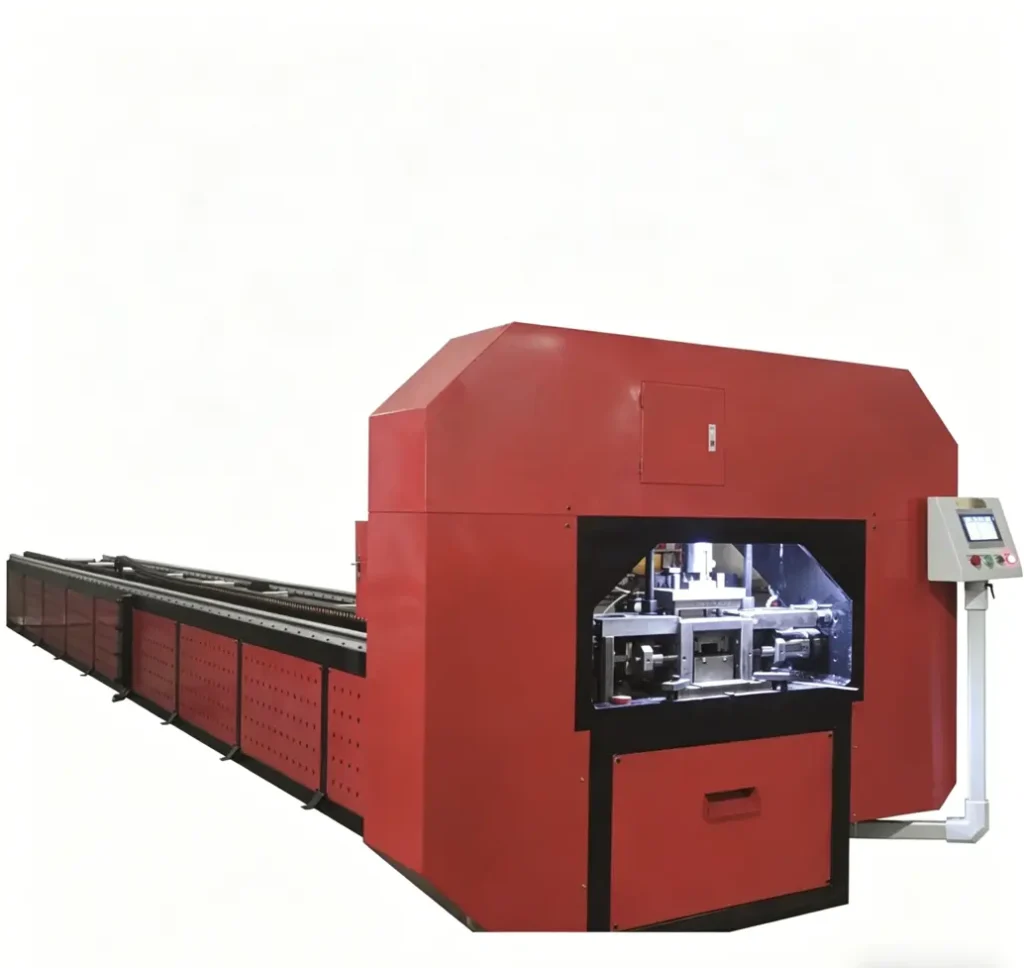
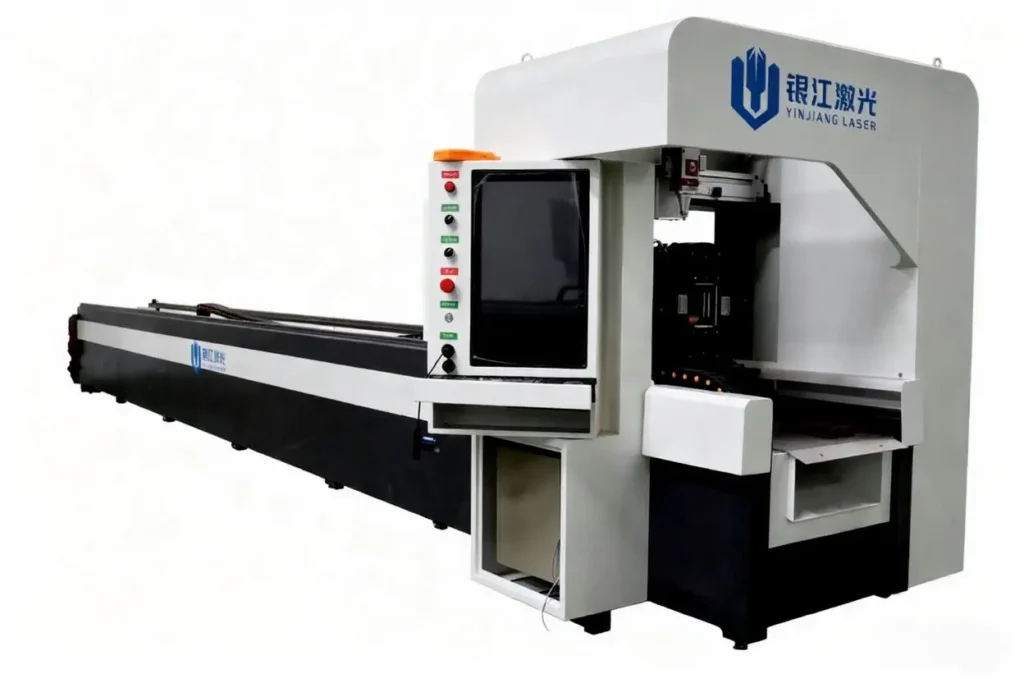
Punching machines and laser cutting machines can both be used to process aluminum profiles, but they work in different ways and are suitable for different production requirements.
An aluminum window and door punching machine uses a punch and matched die to create holes, slots, notches, or other repeated shapes. A laser cutting machine uses a programmed laser beam to cut the required pattern without using a punching die.
The right choice depends on the profile design, hole shape, production quantity, order variety, and how often the processing requirements change.
Processing Method
A punching machine forms the required opening by pressing the punch through the aluminum profile into a matched die.
Because the hole shape is determined by the die, punching is suitable for repeated processing where the same hole pattern is used across a large number of profiles.
A laser cutting machine follows a programmed cutting path. The processing shape can normally be changed by modifying the program rather than manufacturing a new punching die.
Production Quantity
Punching machines are generally suitable for batch production with stable and repeated processing requirements.
Once the correct die and machine parameters have been prepared, the machine can repeatedly process the same hole positions and shapes with a short production cycle.
Laser cutting machines are more flexible for orders involving different product designs, smaller batches, or frequent changes in hole shape and position.
Tooling Requirements
A punching machine usually requires customized dies according to the profile dimensions, wall thickness, and required hole shape.
If the customer changes to a completely different profile or processing pattern, another die may be required.
Laser cutting does not require a separate punching die for every hole shape. However, the cutting parameters still need to be adjusted according to the aluminum material, profile thickness, profile structure, and processing requirements.
Processing Flexibility
Punching is efficient for standard round holes, square holes, slots, notches, and other repeated shapes that are suitable for die processing.
Laser cutting provides greater flexibility for complex contours, irregular openings, and products that frequently change between different designs.
However, the actual processing capability of either machine must be confirmed according to the profile drawing and sample.
Finished Edge and Profile Condition
The finished result of punching depends on the die clearance, die condition, profile support, material thickness, and machine adjustment.
Incorrect tooling or positioning may cause burrs, deformation, or inconsistent hole dimensions.
Laser cutting quality depends on the machine settings, cutting speed, laser power, material condition, and profile structure. Depending on the application, the processed area may require additional cleaning or finishing.
Which Machine Should You Choose?
A punching machine may be more suitable when:
- The same holes or slots are processed repeatedly
- The production quantity is relatively large
- The hole pattern remains stable
- Fast cycle time is important
- Automatic feeding and fixed-length cutting are required
A laser cutting machine may be more suitable when:
- The processing shapes are complex
- Product designs change frequently
- Different orders require different hole patterns
- Customized or small-batch production is common
- Greater programming flexibility is required
For some manufacturers, punching machines and laser cutting machines are not replacements for each other. They can be used for different products or different stages of production.
Before choosing a machine, customers should send their profile drawings, processing drawings, material thickness, profile length, and expected production quantity to the equipment supplier for evaluation.
Punching Machine vs Laser Cutting Machine
Punching machines and laser cutting machines can both be used to process aluminum profiles, but they work in different ways and are suitable for different production requirements.
An aluminum window and door punching machine uses a punch and matched die to create holes, slots, notches, or other repeated shapes. A laser cutting machine uses a programmed laser beam to cut the required pattern without using a punching die.
The right choice depends on the profile design, hole shape, production quantity, order variety, and how often the processing requirements change.
Processing Method
A punching machine forms the required opening by pressing the punch through the aluminum profile into a matched die.
Because the hole shape is determined by the die, punching is suitable for repeated processing where the same hole pattern is used across a large number of profiles.
A laser cutting machine follows a programmed cutting path. The processing shape can normally be changed by modifying the program rather than manufacturing a new punching die.
Production Quantity
Punching machines are generally suitable for batch production with stable and repeated processing requirements.
Once the correct die and machine parameters have been prepared, the machine can repeatedly process the same hole positions and shapes with a short production cycle.
Laser cutting machines are more flexible for orders involving different product designs, smaller batches, or frequent changes in hole shape and position.
Tooling Requirements
A punching machine usually requires customized dies according to the profile dimensions, wall thickness, and required hole shape.
If the customer changes to a completely different profile or processing pattern, another die may be required.
Laser cutting does not require a separate punching die for every hole shape. However, the cutting parameters still need to be adjusted according to the aluminum material, profile thickness, profile structure, and processing requirements.
Processing Flexibility
Punching is efficient for standard round holes, square holes, slots, notches, and other repeated shapes that are suitable for die processing.
Laser cutting provides greater flexibility for complex contours, irregular openings, and products that frequently change between different designs.
However, the actual processing capability of either machine must be confirmed according to the profile drawing, material thickness, dimensional tolerances, and sample.
Finished Edge and Profile Condition
The finished result of punching depends on the die clearance, die condition, profile support, material thickness, and machine adjustment.
Incorrect tooling or positioning may cause burrs, deformation, or inconsistent hole dimensions.
Laser cutting quality depends on the machine settings, cutting speed, laser power, material condition, and profile structure. Depending on the application, the processed area may require additional cleaning or finishing.
Which Machine Should You Choose?
A punching machine may be more suitable when:
- The same holes or slots are processed repeatedly
- The production quantity is relatively large
- The hole pattern remains stable
- Fast cycle time is important
- Automatic feeding and fixed-length cutting are required
A laser cutting machine may be more suitable when:
- The processing shapes are complex
- Product designs change frequently
- Different orders require different hole patterns
- Customized or small-batch production is common
- Greater programming flexibility is required
For some manufacturers, punching machines and laser cutting machines are not replacements for each other. They can be used for different products or different stages of production.
Before choosing a machine, customers should send their profile drawings, processing drawings, material thickness, profile length, and expected production quantity to the equipment supplier for evaluation.
Conclusion
Choosing between an aluminum profile punching machine and a laser cutting machine depends on the profile specifications, processing pattern, production quantity, and required flexibility.
Punching machines are suitable for repeated batch processing with stable hole patterns, while laser cutting machines are better suited to complex shapes and frequently changing designs.
Before purchasing a machine, send us your profile drawings, processing drawings, material thickness, profile length, and expected production quantity. Our team will evaluate your requirements and recommend a suitable processing solution.