English
Choosing the right tube cutting machine is important for factories that process metal pipes, round tubes, square tubes, rectangular tubes, and metal profiles. A suitable machine can improve cutting efficiency, reduce labor costs, improve cutting accuracy, and make production more stable.
However, different factories have different production needs. Some customers only need simple fixed-length cutting, while others need high-precision laser cutting, automatic feeding, or combined tube processing solutions. Before buying a tube cutting machine, it is important to understand your material, tube size, cutting requirement, and daily production volume.
Table of Contents
What Is a Tube Cutting Machine?
- Confirm Your Tube Material
- Check the Tube Shape and Size
- Consider Cutting Accuracy
- Think About Your Production Volume
- Decide Whether You Need Laser Cutting
- Check Whether Punching Is Also Required
- Prepare Information Before Asking for a Quote
- Do Not Choose Only Based on Price
FAQ
What Is a Tube Cutting Machine?
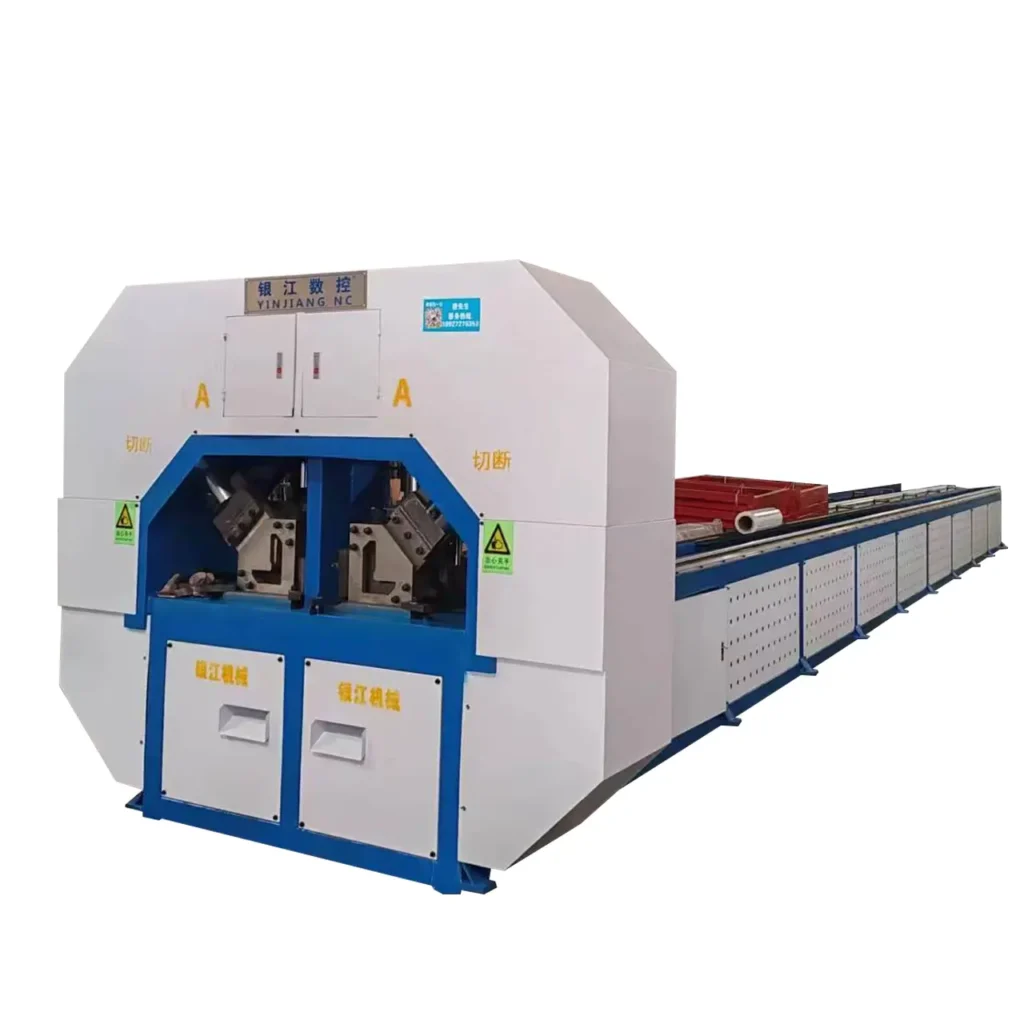
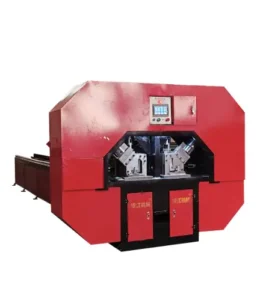
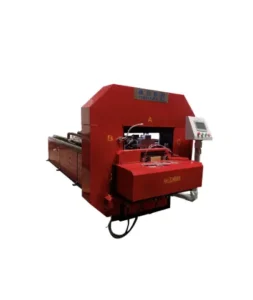
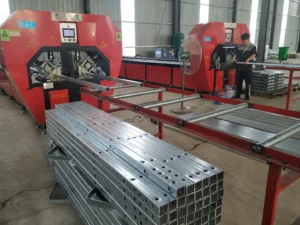
A tube cutting machine is used to cut metal tubes or pipes into required lengths or shapes. It is widely used in guardrail production, metal furniture, steel structures, shelves, racks, fitness equipment, automotive parts, construction materials, and other metal fabrication industries.
Depending on the production requirement, tube cutting machines can include automatic pipe cutting machines, tube laser cutting machines, saw cutting machines, and customized tube processing systems. Each type has different advantages in cutting speed, accuracy, automation, and cost.
1. Confirm Your Tube Material
The first thing to confirm is the material you need to cut. Common materials include carbon steel, stainless steel, aluminum, galvanized pipe, iron pipe, and metal profiles.
Different materials may require different cutting methods. For example, stainless steel and aluminum usually require cleaner cutting edges and better accuracy. Carbon steel pipes used in guardrails or frames may focus more on cutting speed and production cost.
Before asking for a quote, you should tell the supplier your material type clearly. This helps the supplier recommend the right tube cutting machine and machine configuration.
2. Check the Tube Shape and Size
Tube shape and size directly affect the machine model. Common tube shapes include round tube, square tube, rectangular tube, oval tube, and special-shaped profiles.
You also need to confirm the tube diameter, tube width, wall thickness, and cutting length. If your tubes are long or heavy, you may need an automatic feeding system to reduce manual work and improve production efficiency.
For example, a factory cutting long steel pipes for guardrails may need a different solution from a factory processing small aluminum profiles. The more accurate your size information is, the easier it is to choose the right machine.
3. Consider Cutting Accuracy
Different products have different accuracy requirements. Some products only need simple straight cutting, while others need high precision, smooth cutting edges, angle cutting, or complex shapes.
If your product requires high accuracy and clean cutting edges, a tube laser cutting machine may be a good choice. If your production only needs repeated straight cutting, a standard automatic tube cutting machine may be more cost-effective.
When communicating with a supplier, it is helpful to provide your required cutting tolerance. If you are not sure about the tolerance, you can provide product drawings or sample photos.
4. Think About Your Production Volume
Production volume is another important factor. If your factory only cuts a small quantity of tubes each day, a basic machine may be enough. But if you need continuous batch production, automation becomes more important.
For high-volume production, you may need features such as automatic feeding, automatic clamping, servo feeding, batch cutting programs, and stable machine structure.
A higher level of automation can reduce labor costs, improve cutting consistency, and make production easier to manage.
5. Decide Whether You Need Laser Cutting
A tube laser cutting machine is suitable for customers who need flexible cutting shapes, high accuracy, and clean cutting results. It can cut holes, slots, angles, and complex patterns on tubes.
However, a laser tube cutting machine usually costs more than a simple tube cutting machine. If your production only requires fixed-length cutting, you may not need a laser cutting solution.
Laser tube cutting is more suitable for high-precision parts, customized metal products, complex tube shapes, and products with different cutting patterns. Standard tube cutting machines are more suitable for repeated cutting, basic pipe processing, and lower-budget projects.
6. Check Whether Punching Is Also Required
Some factories do not only cut tubes. They also need to punch holes on tubes or profiles. In this case, a tube punching machine or pipe punching machine may also be required.
For example, guardrail production, shelf manufacturing, steel frame production, and aluminum profile processing often require both cutting and punching.
If your production needs both processes, you should tell the supplier clearly. The supplier may recommend a tube cutting machine, a tube punching machine, or a customized tube processing solution depending on your production process.
7. Prepare Information Before Asking for a Quote
To get a more accurate machine recommendation and price, you should prepare the following information:
Material type
Tube shape
Tube diameter or profile size
Wall thickness
Cutting length
Required cutting accuracy
Daily production quantity
Whether punching is also needed
Product drawing or sample photo
With this information, the supplier can better understand your production needs and recommend a more suitable tube cutting machine.
8. Do Not Choose Only Based on Price
Price is important, but it should not be the only factor. A cheaper machine may not be the best choice if it cannot meet your production requirements.
When comparing machines, you should also consider machine stability, cutting speed, accuracy, automation level, spare parts, after-sales support, customization ability, and supplier experience.
A suitable tube cutting machine should help reduce long-term production cost, not only reduce the initial purchase cost.
Conclusion
Choosing the right tube cutting machine depends on your material, tube size, cutting accuracy, production volume, automation needs, and budget. For simple repeated cutting, a standard automatic tube cutting machine may be enough. For high-precision or complex tube processing, a tube laser cutting machine may be a better option.
If your production also requires hole punching, you may need to consider a tube punching machine or a complete tube processing solution.
Before purchasing, it is best to provide your material size, thickness, drawings, and production requirements. This will help the supplier recommend a machine that fits your real production needs.
FAQ
What is a tube cutting machine used for?
A tube cutting machine is used to cut metal tubes, pipes, and profiles into required lengths or shapes. It is commonly used in guardrails, shelves, racks, furniture, steel structures, and metal fabrication.
Is a tube laser cutting machine better than a normal tube cutting machine?
It depends on your production needs. A tube laser cutting machine is better for complex shapes and high precision cutting, while a normal tube cutting machine may be enough for repeated straight cutting.
What information should I provide before buying a tube cutting machine?
You should provide material type, tube shape, tube size, wall thickness, cutting length, production quantity, and product drawings if available.
Can one machine cut and punch tubes?
Some customized systems can combine cutting and punching functions, but many factories use separate tube cutting machines and tube punching machines depending on the production process.