English
Guardrail production usually requires repeated hole punching on metal tubes, profiles, and structural parts. For factories that produce road guardrails, safety barriers, fence tubes, or related metal components, choosing the right tube punching machine can directly affect production speed, hole accuracy, labor cost, and product consistency.
A suitable tube punching machine should not only make holes in metal tubes, but also match the actual material size, hole position, production quantity, and processing requirements of the customer. Before buying a machine, it is important to understand what factors should be considered.
Why Guardrail Production Needs a Tube Punching Machine
Guardrail parts often require regular and repeated holes for bolts, assembly, connection, or installation. If these holes are made manually by drilling, the process can be slow and inconsistent, especially when the production quantity is large.
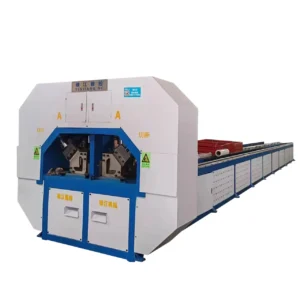
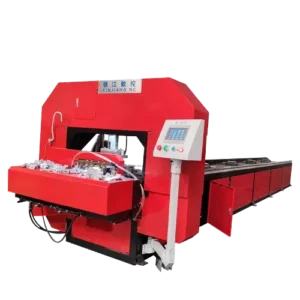
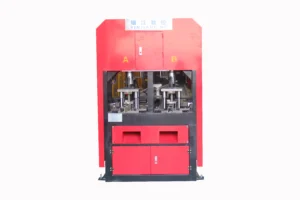
A tube punching machine is designed to improve this process. It can punch holes on round tubes, square tubes, rectangular tubes, profiles, and other metal materials according to the required layout. Compared with manual drilling, punching is usually faster, more stable, and more suitable for batch production.
For guardrail manufacturers, this means better production efficiency, more consistent hole positions, and easier control of product quality.
Key Factors to Consider Before Buying
Choosing a tube punching machine is not only about machine appearance or price. The most important point is whether the machine can match your actual production needs.
1. Material Type and Tube Size
The first thing to confirm is the material you need to process. Common guardrail-related materials may include carbon steel tubes, galvanized steel tubes, stainless steel tubes, aluminum profiles, or other metal sections.
You should also confirm the tube shape and size, such as:
- Round tube diameter
- Square tube size
- Rectangular tube size
- Profile width and height
- Material thickness
Different tube sizes and thicknesses require different machine structures, punching force, and mold designs. If the material is too thick or too large, a standard machine may not be enough. In that case, a customized hydraulic punching solution may be required.
2. Hole Size and Hole Position
Guardrail production often involves repeated holes with fixed spacing. Before choosing a machine, you need to confirm the hole diameter, hole shape, and hole position.
Common hole types include:
- Round holes
- Oval holes
- Square holes
- Slot holes
- Special-shaped holes
The hole position is also important. For example, you may need holes on one side of the tube, two sides, or multiple surfaces. Some production lines require continuous punching with equal spacing, while others require different hole positions according to drawings.
If your product requires complex hole layouts, you should provide drawings or samples before ordering the machine. This helps the machine supplier recommend the correct punching mold and machine structure.
3. Production Quantity
Production quantity is another important factor. If your daily production volume is small, a simple hydraulic punching machine may be enough. But if you need high-volume production every day, you may need an automatic feeding system or a CNC tube punching machine.
For small and medium production, manual feeding or semi-automatic punching can reduce machine cost. For large-scale guardrail production, automatic feeding can improve efficiency and reduce labor work.
Before requesting a quote, you should estimate your daily output, such as how many tubes or guardrail parts need to be processed per day. This will help determine whether you need a standard machine or an automatic production solution.
4. Hydraulic Punching Force
The punching force must match the material thickness and hole size. If the punching force is too small, the machine may not punch cleanly or may damage the mold. If the machine is properly matched, the hole edge will be cleaner and the production process will be more stable.
For thicker steel tubes or larger holes, a stronger hydraulic system is usually needed. For thinner materials or smaller holes, a smaller machine may be enough.
This is why material thickness is very important when choosing a tube punching machine. Always provide the material type, thickness, and hole size before confirming the machine model.
5. Punching Mold Customization
The punching mold is one of the key parts of the machine. Different hole sizes and shapes require different molds. For guardrail production, the mold should be designed according to the actual tube size and hole layout.
A good mold helps improve punching accuracy and reduce burrs or deformation. If your guardrail product has special hole requirements, customized molds can be made according to your drawings.
When discussing the machine with the supplier, you should confirm:
- How many hole sizes are needed
- Whether the mold can be changed
- Whether the machine supports customized molds
- Whether spare molds are available
- Whether the mold is suitable for your material thickness
6. Manual Feeding vs Automatic Feeding
Manual feeding is suitable for lower production volume or simple punching requirements. It is usually more economical and easier to operate.
Automatic feeding is better for batch production. It can help control hole spacing, reduce manual measurement, and improve production consistency. For guardrail manufacturers with regular production orders, automatic feeding can save labor and improve overall efficiency.
The choice depends on your budget, production quantity, and accuracy requirements. If you are not sure which type is suitable, you can provide your production details and ask for a recommended solution.
Common Applications in Guardrail Manufacturing
A tube punching machine can be used in many guardrail and metal structure applications, including:
- Road guardrail parts
- Highway safety barriers
- Fence tubes
- Steel posts
- Support brackets
- Metal profiles
- Assembly holes for bolts and connectors
- Guardrail connection components
In addition to guardrails, the machine can also be used for shelves, racks, furniture tubes, steel structures, aluminum profiles, and other metal fabrication products.
Tube Punching Machine vs Manual Drilling
Manual drilling is suitable for small quantities or temporary processing. However, when the production volume increases, manual drilling may become slow and inconsistent.
A tube punching machine has several advantages:
- Faster processing speed
- More stable hole position
- Better consistency for batch production
- Lower labor intensity
- Suitable for repeated hole punching
- Can be customized for different tubes and profiles
For guardrail production, where many parts require repeated holes, punching is usually more efficient than drilling.
What Information Should You Provide Before Requesting a Quote?
To recommend the right tube punching machine, the supplier usually needs the following information:
- Material type
- Tube shape and size
- Material thickness
- Hole diameter or hole shape
- Hole position and spacing
- Daily production quantity
- Product drawing or sample photo
- Manual or automatic feeding preference
- Voltage requirement
- Special production requirements
The more detailed your information is, the easier it is to recommend a suitable machine solution.
Conclusion
Choosing a tube punching machine for guardrail production should be based on your actual material, hole layout, production quantity, and automation requirements. A suitable machine can help improve production efficiency, reduce manual work, and make hole punching more consistent.
For guardrail manufacturers, the right machine is not always the most expensive one, but the one that best matches the tube size, material thickness, hole position, and production needs.
If you are not sure which machine is suitable for your production, you can send your material size, thickness, hole drawing, and daily output requirements. Our team can help recommend a suitable tube punching machine solution according to your actual application.
FAQ About Tube Punching Machines for Guardrail Production
What type of tube punching machine is suitable for guardrail production?
The suitable machine depends on your tube size, material thickness, hole shape, hole position, and daily production quantity. For simple and small-batch production, a hydraulic tube punching machine may be enough. For high-volume guardrail production, an automatic feeding or CNC tube punching machine is usually more efficient.
Can one tube punching machine punch different hole sizes?
Yes, different hole sizes can usually be achieved by changing punching molds. The machine can be customized with different molds according to round holes, oval holes, square holes, slot holes, or special-shaped holes. Before ordering, it is better to provide your hole drawings and tube specifications.
Is automatic feeding necessary for guardrail production?
Automatic feeding is not always necessary, but it is useful for batch production. If your guardrail parts require repeated holes with fixed spacing, automatic feeding can improve accuracy, reduce manual measurement, and increase production efficiency.
What information is needed before choosing a guardrail punching machine?
You should provide the material type, tube shape, tube size, material thickness, hole size, hole position, hole spacing, daily production quantity, and product drawings. These details help the supplier recommend the right machine model and mold solution.
Is tube punching faster than manual drilling?
For repeated holes and batch production, tube punching is usually faster than manual drilling. It also provides more consistent hole positions and reduces labor intensity, which is important for guardrail, fence, steel post, and metal profile production.