English
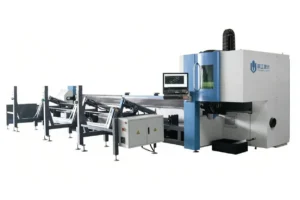
A fiber laser sheet cutting machine is used to cut flat metal sheets into parts with different shapes, holes, slots and contours.
Unlike a production process that depends on dedicated cutting dies for every part design, laser cutting allows manufacturers to change the programmed cutting pattern when the product design changes.
This makes sheet laser cutting useful not only for large production batches, but also for manufacturers handling different product designs and customized orders.
Modern laser systems are widely used for non-contact cutting of metal and other materials, while 2D laser cutting equipment can be configured for different sheet sizes and production requirements.
So what can a fiber laser sheet cutting machine actually produce?
Below are eight common applications in metal fabrication. High-power lasers in advanced manufacturing.
Table of Contents
1. Electrical Cabinets and Enclosures
Electrical cabinets are a common sheet metal product.
A cabinet may require:
- Rectangular openings
- Round holes
- Cable openings
- Ventilation slots
- Mounting holes
- Door panels
- Side panels
Different openings can often be included directly in the cutting drawing.
This means the flat sheet can leave the laser cutting process with much of the required geometry already completed before bending and assembly.
For manufacturers producing several cabinet models, this is especially useful because different programs can be prepared for different panel designs.
After laser cutting, the parts can continue to:
Bending → Welding → Surface Treatment → Assembly
Laser cutting therefore becomes one of the first important steps in the complete sheet metal fabrication process.
2. Machinery Covers and Equipment Panels
Industrial machinery requires many sheet metal parts that customers may not notice at first.
Examples include:
- Machine covers
- Control cabinet panels
- Protective guards
- Side panels
- Bottom plates
- Mounting plates
- Inspection doors
These parts often contain a combination of straight edges, holes, slots and irregular contours.
A laser sheet cutting machine can process these features from a digital cutting file, making it suitable for machinery manufacturers that frequently change equipment dimensions or customize machines for different customers.
This is particularly relevant for customized industrial machinery.
For example, one customer may require a larger electrical cabinet, while another requires different openings for switches, cables or ventilation.
Instead of creating a new cutting die for every panel design, the cutting program can be changed according to the new drawing.
3. Metal Furniture Components
Sheet metal is widely used in commercial and industrial furniture.
Typical products include:
- Metal cabinets
- Shelving
- Storage systems
- Workbenches
- Lockers
- Furniture frames
- Table components
Many of these products require multiple sheet metal parts that later need to be bent, welded or assembled.
Laser cutting is useful when manufacturers need different:
- Panel dimensions
- Hole arrangements
- Decorative patterns
- Connection slots
- Mounting points
For furniture factories producing several product models, the ability to change cutting drawings can make the production process more flexible.
A single metal sheet can also contain many different parts arranged through nesting software.
YINJIANG’s sheet metal laser cutting equipment includes visual nesting and material-saving functions as part of its current machine configuration.
4. HVAC and Ventilation Parts
HVAC systems require a large number of sheet metal components.
These can include:
- Ventilation panels
- Duct components
- Flanges
- Covers
- Air-conditioning housings
- Mounting plates
- Connection components
Some products are simple rectangles, while others require more complicated profiles or repeated openings.
Laser cutting can be useful when a factory processes different component dimensions according to building drawings or customer orders.
This is especially relevant for low-to-medium quantity customized products where designs may change frequently.
After cutting, the sheet metal components may continue to forming, bending, welding or assembly operations.
5. Automotive and Equipment Components
Laser-cut sheet metal parts can also be used as components for vehicles and industrial equipment.
Typical examples include:
- Brackets
- Mounting plates
- Covers
- Guards
- Structural panels
- Reinforcement components
These parts may appear simple, but their hole locations and outside profiles often need to match other components during assembly.
A digital cutting process makes it possible to produce different part geometries without preparing a dedicated cutting die for every design.
Fiber laser systems are used for a wide range of sheet-metal cutting applications, from thin material to thicker sheets depending on machine configuration and laser power.
However, the correct machine configuration should always be selected according to:
- Material type
- Sheet thickness
- Sheet dimensions
- Required cutting quality
- Production quantity
6. Signs and Decorative Metal Panels
Not every laser-cut product is an industrial machine part.
Laser sheet cutting is also widely used for products that require more complex visual designs.
Examples include:
- Metal signs
- Decorative screens
- Building panels
- Metal logos
- Interior decoration
- Patterned panels
These products may contain many irregular curves, letters, openings or decorative patterns.
For this type of work, flexibility is often more important than repeating the same simple hole thousands of times.
The design can be created digitally and converted into a cutting program.
When a customer changes the logo, pattern or dimensions, the manufacturer can update the drawing rather than manufacture an entirely new set of tooling.
This makes laser cutting especially useful for customized metal products.
7. Construction and Structural Components
Construction projects use many sheet metal components that require cutting before bending, welding or assembly.
Examples include:
- Connection plates
- Mounting plates
- Equipment bases
- Steel brackets
- Support plates
- Cover plates
- Custom structural components
Different projects may use different hole patterns and outside dimensions.
This creates a production environment where flexibility can be important.
If the component design changes between projects, laser cutting allows the manufacturer to update the cutting file according to the new drawing.
For highly repetitive products with very stable hole patterns, punching may sometimes be another suitable production method.
However, when part shapes change frequently or complicated contours are required, laser cutting provides greater design flexibility.
This is why YINJIANG manufactures both punching equipment and laser cutting equipment rather than treating one process as suitable for every metal product. The company’s current product range includes punching machines, fiber laser cutting machines and customized sheet-metal automation equipment.
8. Customized Sheet Metal Parts
One of the most important applications of a fiber laser sheet cutting machine is custom metal fabrication.
A customer may send a drawing for a component that has never been produced before.
The drawing may include:
- Outside contours
- Internal holes
- Slots
- Curves
- Openings
- Different part sizes
For customized production, the manufacturer first evaluates the drawing and material.
The cutting program can then be prepared according to the required geometry.
A typical workflow may look like:
Customer Drawing → CAD File → Nesting → Laser Cutting → Bending/Welding → Finished Product
This is useful for factories working with many customers because each order does not necessarily use the same part design.
Sheet-metal manufacturers commonly use laser systems as part of a wider digital production process extending from design through manufacturing.
Why Part Layout Matters in Sheet Laser Cutting
Cutting speed is not the only factor affecting production efficiency.
How different parts are arranged on a sheet also matters.
Poor layout can leave large unused areas of metal between parts.
Better nesting can place compatible parts closer together while still maintaining suitable cutting conditions.
For example, instead of cutting only one type of part from one sheet, manufacturers may sometimes arrange:
- Large parts
- Small brackets
- Small plates
within the same sheet layout.
The objective is to use more of the available material and reduce unnecessary scrap.
Material utilization is an important part of sheet-metal laser production, and laser-industry manufacturers such as TRUMPF also develop nesting and part-retention methods specifically aimed at reducing sheet-metal waste.
Laser Sheet Cutting Is Only One Part of the Production Process
A common mistake is to evaluate a laser cutting machine only by how quickly it cuts.
For many factories, the actual production process includes several stages:
Raw Sheet
↓
Laser Cutting
↓
Part Sorting
↓
Bending
↓
Welding
↓
Surface Treatment
↓
Assembly
This means manufacturers should also think about what happens before and after laser cutting.
For example:
If the laser cutting machine produces parts faster than workers can sort and bend them, the next production stage may become the bottleneck.
For higher-volume factories, automation, material handling and production planning become increasingly important.
Modern 2D laser systems can therefore be integrated with loading and other automation solutions rather than operating only as isolated cutting machines.
What Materials Can Be Processed?
The exact processing capability depends on the laser source, machine configuration, material and thickness.
Common sheet-metal applications include materials such as:
- Carbon steel
- Stainless steel
- Aluminum
- Other suitable metal sheets
Different materials and thicknesses require different machine configurations and cutting parameters.
For this reason, customers should not select a machine simply because two machines have the same appearance or nominal laser power.
The actual workpiece requirements should be evaluated first. If your production mainly involves tubes instead of flat sheets, see our automatic laser tube cutting machine solution.
What Information Should You Provide Before Requesting a Machine?
If you are planning to purchase a fiber laser sheet cutting machine, prepare the following information:
- Material type
- Minimum sheet thickness
- Maximum sheet thickness
- Sheet dimensions
- Typical product drawings
- Required production quantity
- Required cutting patterns
- Automation requirements
Product drawings are particularly useful.
They allow the machine supplier to understand whether your production consists mainly of:
- Large simple panels
- Many small parts
- Complex contours
- Repeated standardized products
- Frequently changing customized orders
The appropriate machine configuration may be different for each situation.
Conclusion
A fiber laser sheet cutting machine is not limited to one industry or one type of product.
It can be used to manufacture parts for:
- Electrical cabinets
- Industrial machinery
- Metal furniture
- HVAC systems
- Automotive and equipment components
- Signs and decorative panels
- Construction projects
- Customized sheet metal fabrication
The main question is therefore not simply:
“Can a laser cutting machine cut metal sheet?”
A more useful question is:
“What type of parts does my factory need to produce, and what machine configuration matches that production?”
YINJIANG manufactures laser cutting machines as well as customized sheet-metal processing equipment, and its current sheet laser cutting solution is designed specifically for metal-sheet processing.
If you are planning a sheet metal cutting project, send us your material type, thickness, sheet size and product drawings. Our team can evaluate a suitable machine configuration according to your production requirements. Contact our team.
FAQ
What is a fiber laser sheet cutting machine used for?
A fiber laser sheet cutting machine is used to cut flat metal sheets into parts such as panels, brackets, covers, mounting plates, cabinet components and customized metal products.
Can one machine cut different part shapes?
Yes. Different cutting geometries can be prepared through digital drawings and cutting programs, subject to the machine’s processing range and configuration.
Is laser cutting suitable only for mass production?
No. Laser cutting can be used for both repetitive production and customized parts. Its programmable nature is particularly useful when product designs change. TRUMPF notes that 2D laser cutting systems are used for both large and small batch sizes.
What information should I send before requesting a quotation?
Send your material type, sheet dimensions, thickness range, product drawings and expected production quantity.
Can the machine configuration be customized?
Yes. The final configuration should be selected according to material, thickness, sheet dimensions, cutting requirements and production needs. YINJIANG’s broader machinery offering also includes customized sheet-metal automation solutions.