English
Why Do Punching Dies Wear Out Quickly? 7 Causes and Solutions
Punching dies are essential tooling in metal tube and profile processing. During continuous production, the punch and die are repeatedly exposed to impact, pressure and friction, so gradual wear is unavoidable.
However, there is a big difference between normal tool wear and a punching die that becomes blunt, chipped or damaged much earlier than expected.
Excessive punching die wear not only increases tooling costs. It can also cause larger burrs, inaccurate holes, material deformation, unstable production and unexpected machine downtime.
For manufacturers using automatic punching machines to process channel steel, angle steel, square tubes, rectangular tubes, aluminum profiles and other metal sections, finding the real cause of premature tooling wear is important.
Below are seven common causes of punching die wear and practical ways to improve die life.
1. Incorrect Punch and Die Clearance
Punch-to-die clearance is one of the most important factors affecting punching quality and tooling life.
If the clearance is too small, excessive force is required to shear the material. This increases friction, heat and pressure on the cutting edges.
The punch may also experience greater resistance when returning from the material.
If the clearance is too large, the material may bend excessively before being cut. This can result in:
- Larger burrs
- Poor hole edges
- Material deformation
- Unstable punching quality
- Increased stress on the tooling
The correct clearance is not the same for every application.
It depends on factors such as:
- Material type
- Material thickness
- Material hardness
- Hole diameter
- Hole shape
- Profile structure
For example, a die setup used for thin aluminum profiles should not automatically be used for thicker carbon steel profiles.
Solution
Before mass production, make sure the die clearance matches the actual material being processed.
When changing material thickness, material grade or product type, check whether the original tooling configuration is still suitable.
Testing several samples before continuous production can prevent unnecessary tool damage.
2. The Punch and Die Are Not Properly Aligned
Misalignment is another common reason for premature punching tool wear.
Ideally, the punch should enter the die evenly.
If the punch is slightly offset, one side of the cutting edge may carry significantly more load than the other side.
Over time, this can cause:
- Uneven tool wear
- Chipped punch edges
- Scratches on the punch
- Larger burrs on one side of the hole
- Abnormal punching noise
- Increased punching resistance
In severe cases, the punch may directly contact the die.
Solution
Check the punch and die alignment whenever tooling is installed or replaced.
Operators should also inspect:
- Die mounting position
- Guide components
- Fasteners
- Material positioning
- Feeding accuracy
For an automatic punching machine, feeding accuracy is especially important because incorrect material positioning can create additional side force during punching.
If the tooling begins wearing heavily on only one side, alignment should be one of the first items checked.
3. The Tooling Material Is Not Suitable for the Application
Different metal materials create different loads on punching tools.
A tooling material that performs well when punching aluminum may not provide the same service life when processing thicker or harder carbon steel.
Production conditions can also vary greatly between:
- Mild steel
- Stainless steel
- Aluminum
- Channel steel
- Angle steel
- Flat bar
- Square tube
- Rectangular tube
- Structural profiles
In addition to material hardness, production quantity is also important.
A die used occasionally does not experience the same working conditions as tooling performing thousands of punching cycles every day.
Solution
The tooling should be selected according to the real production requirements.
Before designing a punching solution, provide information such as:
- Material type
- Material grade
- Material thickness
- Profile dimensions
- Hole diameter
- Hole shape
- Hole quantity
- Daily production volume
For angle steel and flat bar production, the tooling and machine configuration should match the actual material dimensions and hole pattern.
Selecting the correct tooling from the beginning is usually more economical than frequently replacing unsuitable dies.
4. Insufficient Lubrication
Friction occurs between the punch, material and die during the punching process.
When lubrication is insufficient, friction and temperature can increase.
This may accelerate wear on the cutting edge and, in some applications, cause material to stick to the punch surface.
Typical symptoms may include:
- Material buildup on the punch
- Scratches on the tooling
- Increasing punching resistance
- Rough hole edges
- Higher tooling temperature
- Difficulty during the return stroke
Solution
Use an appropriate lubrication method according to the processed material and production conditions.
At the same time, keep the tooling area clean.
Metal particles, dirt and hardened lubricant around the die can interfere with normal tool movement and may create additional wear.
Lubrication should be treated as part of routine punching die maintenance, not only as a solution after problems appear.
5. The Raw Material Has Changed
Sometimes a punching machine runs normally for a long period and suddenly starts experiencing faster tooling wear.
The machine may not be the actual problem.
The raw material may have changed.
Even when two profiles have the same external dimensions, differences may exist in:
- Wall thickness
- Material hardness
- Material grade
- Surface coating
- Dimensional tolerance
- Weld seam position
A thicker or harder material requires greater punching force. Material condition, inadequate support and incorrect tooling can also contribute to tube deformation during punching.
If the tooling and machine settings remain unchanged, the load applied to the punch may increase considerably.
Solution
When abnormal die wear suddenly appears, compare the current material with previous batches.
Check whether:
- The supplier has changed
- Material thickness has changed
- Material grade has changed
- The profile tolerance is different
- The weld seam position has changed
Whenever a new material is introduced, sample testing should be completed before starting high-volume production.
6. Incorrect Punching Pressure or Stroke
More punching force does not necessarily produce better holes.
The machine needs enough force to complete the punching process cleanly, but excessive pressure or unnecessary punch travel can increase stress on the tooling.
Problems may occur when:
- Hydraulic pressure is too high
- The punch travels too deeply
- The return stroke is incorrectly adjusted
- Punching speed is unsuitable
- The tooling contacts the die unnecessarily
- Multiple holes are punched without an appropriate tooling design
An excessive stroke may cause the punch to travel farther than required after the material has already been cut.
This provides no production benefit but may increase stress on the machine and tooling.
Solution
Set the punching parameters according to:
- Material thickness
- Material strength
- Hole configuration
- Tooling structure
After changing dies or beginning production of a new product, test several workpieces first.
Check the hole quality, burr condition, material deformation and tool movement before starting continuous automatic production.
Stable punching is more important than simply using maximum pressure.
7. Punching Scrap Is Not Removed Properly
Every punched hole creates scrap or a punched slug.
In continuous production, these small metal pieces must be removed correctly.
If scrap remains around or inside the die, it may interfere with the next punching cycle.
This can cause:
- Tool chipping
- Scratches
- Poor hole quality
- Material deformation
- Die blockage
- Unexpected tooling failure
The problem can become more serious with automatic production because many punching cycles may be completed in a short period.
Solution
Keep scrap-removal passages clean and inspect the die area regularly.
If scrap frequently becomes stuck, do not simply remove it and continue production.
The underlying reason should be investigated.
Possible causes include:
- Incorrect die clearance
- Worn cutting edges
- Poor slug discharge
- Unsuitable tooling design
- Material deformation
A stable scrap-removal system is an important part of reliable high-volume punching production.
What Are the Signs of Excessive Punching Die Wear?
A punching die does not need to break completely before it should be inspected.
Several warning signs may indicate that the tooling condition is deteriorating.
These include:
- Burrs becoming larger
- Hole edges becoming rough
- Hole dimensions becoming inconsistent
- More punching force being required
- Material sticking to the punch
- Abnormal punching noise
- One side of the tool wearing faster
- Small chips appearing on the cutting edge
- Increasing material deformation
Hole quality is often one of the easiest ways to monitor tooling condition.
If the same material and machine settings suddenly produce worse holes, the punch and die should be inspected.
How Can Manufacturers Extend Punching Die Life?
There is no fixed number of cycles that applies to every punching die.
Tool life depends on the material, thickness, hole shape, tooling design, production frequency and machine condition.
However, several practices can help extend punching die life.
Use Tooling Designed for the Actual Material
Do not select tooling only according to the hole diameter.
Material thickness, hardness and production volume should also be considered.
Check Alignment Regularly
Incorrect alignment can cause severe one-sided wear even when the tooling itself is high quality. Regular machine and tooling inspection is also an important part of maintaining a stable punching process. OSHA recommends establishing and implementing a maintenance and inspection program for press equipment.
Use the Correct Die Clearance
Different materials and thicknesses may require different clearance configurations.
Keep the Tooling Area Clean
Remove scrap and metal particles before they interfere with the punching process.
Monitor Hole Quality
Changes in burrs and hole edges can provide early warning of tooling wear.
Test After Changing Production Conditions
When changing material, dies or machine parameters, test several workpieces before starting mass production.
Record Tool Usage
For factories performing repetitive high-volume production, recording tooling usage and maintenance can help identify abnormal wear earlier.
When Is Customized Punching Tooling Necessary?
Standard round-hole tooling is suitable for many applications, but industrial profile processing often requires more complicated punching solutions.
Customized tooling may be needed for:
- Multiple holes in one punching cycle
- Long slots
- Special-shaped holes
- Different holes on several sides
- Channel steel
- Angle steel
- Aluminum profiles
- Solar mounting profiles
- Furniture tubes
- Construction profiles
The die should not be considered separately from the machine.
For automatic production, tooling design should work together with the feeding system, material support, positioning method and punching sequence.
For example, when producing the same profile repeatedly, an automatic feeding and customized punching system can reduce manual measuring while maintaining more consistent hole positioning.
What Information Should You Provide Before Choosing a Punching Solution?
If you are planning a new automatic punching line, providing complete production information can make machine and tooling configuration much easier.
We normally recommend preparing:
- Material type
- Material grade
- Profile shape
- Profile dimensions
- Wall thickness
- Maximum material length
- Hole diameter
- Hole shape
- Hole spacing
- Number of punching sides
- Required cutting function
- Daily production quantity
- Product drawing
A product drawing is particularly useful.
It allows the punching sequence, feeding method, tooling structure and machine configuration to be evaluated together.
Conclusion
Normal punching die wear cannot be completely avoided, but unusually fast wear usually indicates that something in the production process needs attention.
Incorrect die clearance, poor alignment, unsuitable tooling material, insufficient lubrication, raw material changes, incorrect machine parameters and poor scrap removal can all shorten tool life.
Instead of repeatedly replacing damaged dies, manufacturers should evaluate the complete punching process, including the machine, tooling, raw material and feeding system.
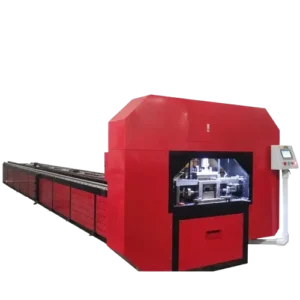
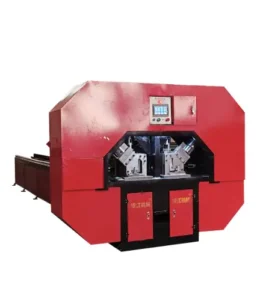
YINJIANG manufactures automatic punching and cutting equipment for metal tubes and profiles, including channel steel, angle steel, flat bar, aluminum profiles, photovoltaic components and other industrial products.
Our machines can be customized according to the customer’s material dimensions, thickness, hole pattern and production requirements.
If you have a new punching project, send us your product drawing, material dimensions, thickness and required production capacity. We can evaluate the application and recommend a suitable machine and tooling solution.