English
Table of Contents
Introduction
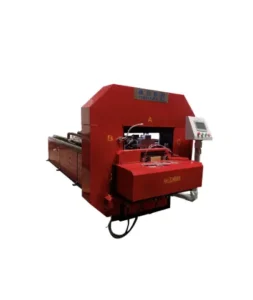
An automatic tube punching machine is designed to solve common production problems found in factories that process round tubes, square tubes, rectangular tubes, and other metal profiles.
When production relies heavily on manual measuring, drilling, material handling, and repeated positioning, factories may experience inconsistent hole spacing, slow output, higher labor requirements, and difficulty completing large orders on time.
By combining automatic feeding, programmed positioning, hydraulic punching, customized dies, and optional fixed-length cutting, the machine can simplify several production steps.
Below are five common production problems that an automatic tube punching machine can help solve.
1. Manual Measurement Takes Too Much Time
In traditional production, workers may need to measure and mark every hole position before drilling or punching.
This process becomes inefficient when one tube requires many holes or when hundreds of tubes use the same pattern. Workers must repeatedly measure the distance between holes, mark the material, position the tube, and confirm the dimensions.
Manual measurement also increases the possibility of human error, especially during long working hours or large production batches.
An automatic feeding system moves the tube according to programmed distances. After the operator enters the hole positions, spacing, tube length, and production quantity, the machine feeds the material to each required location.
This can reduce repeated measuring and allow the operator to focus on machine setup, material loading, and finished-part inspection.
2. Hole Spacing Is Inconsistent
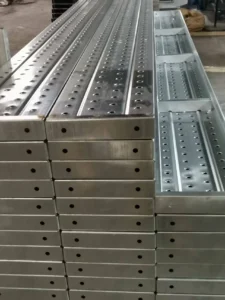
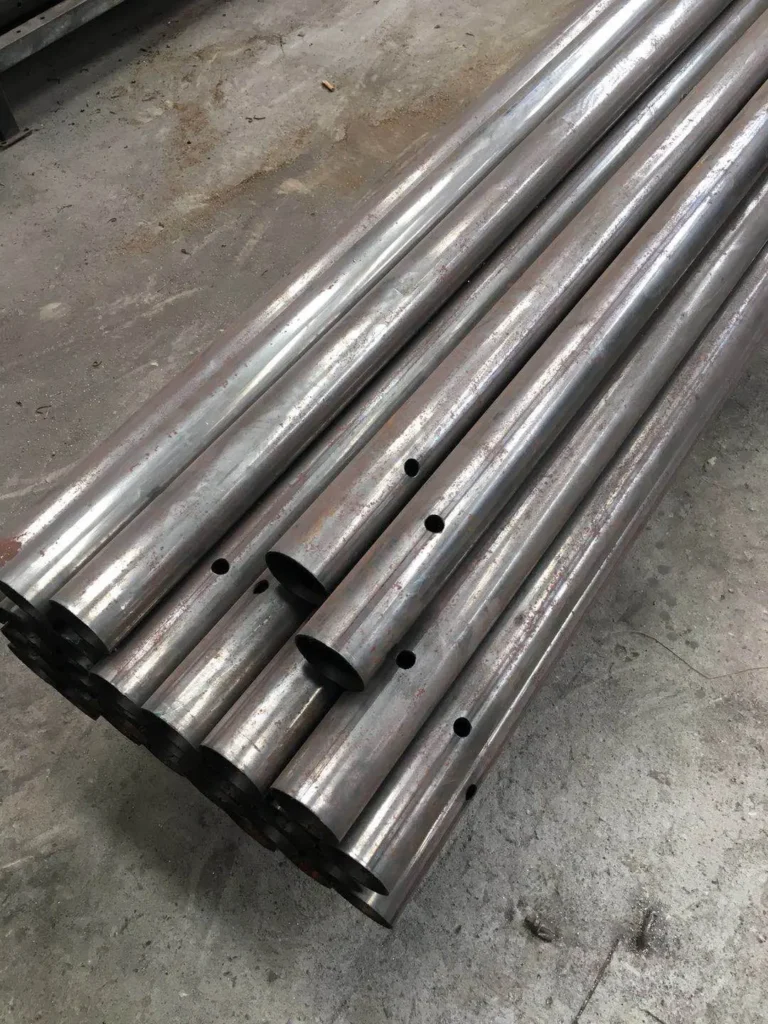
Consistent hole spacing is important for products such as guardrails, fences, shelves, solar mounting structures, furniture frames, and construction components.
If the distance between holes is inaccurate, workers may experience problems during welding or assembly. Parts may not align correctly, connectors may not fit, and some workpieces may require rework or replacement.
Common causes of inconsistent hole positions include:
- Incorrect manual measurement
- Material movement during processing
- Unstable tube support
- Inaccurate feeding distance
- Worn positioning components
- Incorrect machine settings
An automatic tube punching machine can use servo feeding and programmed positioning to control the distance between punching locations.
However, positioning accuracy still depends on the machine configuration, tube condition, supporting devices, feeding system, and correct parameter settings.
Before continuous batch production, the first finished pieces should be checked carefully to confirm the hole position and spacing.
3. Material Must Be Handled Repeatedly
Some factories use separate machines for measuring, drilling, punching, and cutting.
The material may need to be moved from one workstation to another several times. Each transfer requires workers to lift, position, and realign the tube.
Repeated handling can increase:
- Labor requirements
- Production time
- Material movement
- Risk of surface damage
- Positioning errors
- Work-in-process inventory
For long or heavy tubes, repeated manual handling can also make production more difficult.
Depending on the equipment configuration, an automatic tube punching machine can combine feeding, positioning, punching, and fixed-length cutting in one production line.
After the raw tube is loaded, the machine can move it through the programmed punching positions and complete the required cutting operation.
This reduces unnecessary transfers between machines and helps create a more continuous production process.
4. Production Depends Too Much on Skilled Workers
Manual drilling and punching often depend on experienced workers.
Skilled operators may need to understand the drawings, calculate hole positions, adjust the material, operate different machines, and inspect every processing step.
When experienced workers are unavailable, production may slow down. New workers may also require considerable training before they can achieve consistent results.
Automatic equipment does not completely remove the need for trained operators, but it can reduce the number of repetitive decisions workers must make during production.
The operator mainly needs to:
- Select or enter the correct program
- Load the required material
- Install the correct punching dies
- Confirm the processing parameters
- Inspect the first finished pieces
- Monitor the machine during production
Saved programs can also be reused when the same product is manufactured again.
This can reduce setup time and make repeated orders easier to manage. The factory still needs operators who understand machine operation, tooling, safety, and quality inspection, but production becomes less dependent on constant manual measuring.
5. Batch Orders Are Difficult to Complete on Time
A production method that works for small orders may become inefficient when order quantities increase.
For example, manually drilling several tubes may be acceptable for a sample order. However, when hundreds or thousands of tubes require the same holes, manual production can become a bottleneck.
Factories may face:
- Longer delivery times
- Overtime labor costs
- Inconsistent finished parts
- Delayed assembly
- Increased rework
- Difficulty accepting larger orders
An automatic tube punching machine is especially suitable for repeated production with stable tube specifications and hole patterns.
Once the tooling and program are prepared, the machine can repeat the same feeding and punching cycle across multiple workpieces.
Some machine configurations can also process several tubes during the same production cycle. This may be suitable for products such as security screens, fences, railings, and other standardized tube components.
The actual production capacity depends on the tube size, wall thickness, number of holes, punching method, feeding speed, tooling design, and machine configuration.
Customers should therefore provide complete drawings and expected production quantities before selecting a machine.
How Customized Punching Dies Support Different Products
The hole shape produced by a punching machine is determined by the punch and matched die.
Customized dies can be designed for different processing requirements, including:
- Round holes
- Square holes
- Rectangular slots
- Oval openings
- Notches
- Other repeated shapes suitable for punching
The die design must match the tube dimensions, wall thickness, material, hole size, and required processing position.
If the customer changes to a different tube specification or hole shape, another punching die may be required.
Correct die clearance is also important. Improper clearance may cause excessive burrs, tube deformation, poor hole appearance, or increased tool wear.
Before manufacturing the tooling, customers should provide accurate tube and hole drawings.
When an Automatic Tube Punching Machine Is Most Suitable
Automatic punching equipment is generally suitable when:
- The same hole pattern is processed repeatedly
- Production quantities are relatively large
- Stable hole spacing is required
- Manual measurement takes too much time
- Material handling needs to be reduced
- Fixed-length cutting is also required
- The factory wants to improve batch consistency
For frequently changing shapes, highly customized small orders, or complex contours, laser cutting may sometimes offer greater flexibility.
The final choice should depend on the tube drawing, hole pattern, material thickness, production quantity, required cycle time, and available budget.
Information to Provide Before Requesting a Solution
To recommend a suitable automatic tube punching machine, the equipment supplier needs accurate production information.
Customers should provide:
- Tube cross-sectional drawing
- Outside dimensions or diameter
- Wall thickness
- Material type
- Total tube length
- Hole shape and size
- Distance between holes
- Processing side
- Required cutting length
- Expected daily or monthly output
- Photos or samples of the finished product
Complete drawings allow the supplier to evaluate the punching force, feeding method, positioning system, supporting fixtures, tooling design, and cutting configuration.
When possible, customers should also send sample materials for machine testing before shipment.
Conclusion
An automatic tube punching machine can help factories reduce manual measuring, improve hole-spacing consistency, decrease repeated material handling, reduce dependence on skilled workers, and complete batch orders more efficiently.
The main value of automatic equipment is not simply higher speed. It is the ability to create a more repeatable and organized production process.
Before choosing a machine, customers should provide complete tube specifications, processing drawings, production quantities, and finished-product requirements. Based on this information, the supplier can evaluate whether automatic feeding, customized dies, multi-tube processing, or integrated cutting is suitable for the project. Send us your tube drawings and production requirements for machine configuration evaluation.